



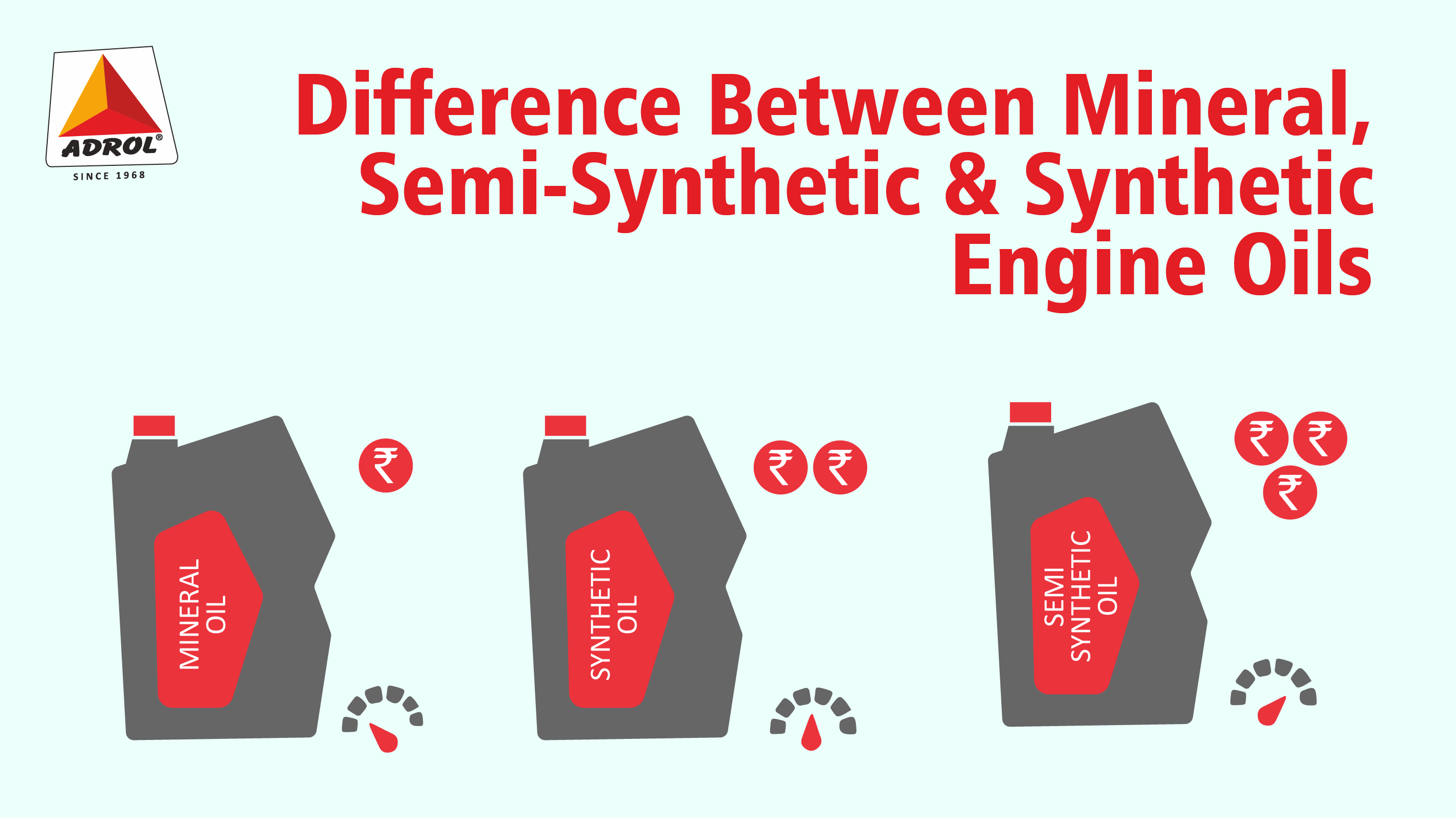
Difference Between Mineral, Semi-Synthetic & Synthetic Engine Oils
Mineral vs Synthetic Oil: Which One Is Best for Your Engine?
When choosing the right engine oil, most people hear what kind of oil they want as there are three terms such as mineral oil, semi-synthetic oil, and synthetic oil. However, only a few people understand what truly sets them apart. Many blogs repeat the same surface-level points, leaving vehicle owners confused.
This guide goes deeper. It explains how each oil is made, how it behaves inside your engine, how it reacts to Indian traffic and climate, and which oil actually saves money in the long run not just on paper.
What Is Engine Oil and Why Does Its Type Matters?
Engine oil does much more than lubrication. As It reduces friction between moving parts that also helps in controlling engine temperature. Moreover, the right oil for your vehicle also prevents metal wear and corrosion. Besides, it also cleans sludge, microscopic debris and maintains engine efficiency with mileage.
The type of oil you use determines how well these functions are performed over time, especially in stop-and-go traffic, long idling hours, dusty roads, and extreme heat.
Mineral Engine Oil: The Traditional Choice
Mineral engine oil is derived directly from refined crude oil with minimal chemical processing. It is the most basic form of engine oil and has been widely used in older and simpler engines.
Inside the engine, mineral oil contains molecules of uneven size. This causes lubrication to be less consistent, especially as temperatures rise. Over time, mineral oil thins faster and loses its protective strength.
Mineral oil is best suited for:
-Older vehicles with simple engine designs
-Low-mileage or occasionally used vehicles
-Owners looking for low upfront maintenance costs
However, it also comes with limitations. It breaks down faster in high temperatures, forms sludge more quickly in city traffic, and requires frequent oil changes. While it seems affordable initially, repeated replacements often increase long-term costs.
Semi-Synthetic Engine Oil: The Balanced Middle Ground
Semi-synthetic oil is a blend of mineral oil and synthetic base oil, designed to improve performance without a significant jump in price.
It offers better stability and cleanliness than mineral oil while remaining cost-effective for daily use.
Key advantages of semi-synthetic oil include:
-More stable viscosity in changing temperatures
-Reduced engine wear during cold starts
-Better protection for short city trips
This oil works especially well for mid-aged engines (around 5–7 years old) and is a good transition option for vehicles moving away from mineral oil. However, since it still contains mineral oil, degradation is slowed but not eliminated.
Synthetic Engine Oil: Engineered for Excellence
Synthetic oil is chemically engineered, not just refined. Every molecule is designed to perform consistently under extreme conditions.
What Makes Synthetic Oil Superior?
-Uniform molecular structure
-Exceptional heat resistance
-Minimal viscosity breakdown
-Stronger lubrication film
Synthetic Oil Benefits You Actually Feel
-Smoother acceleration
-Quieter engine noise
-Better fuel efficiency
-Extended engine life
Why Synthetic Oil Excels in Indian Conditions?
Most Indian driving involves:
-Heavy traffic
-High ambient temperatures
-Long idling
-Short trips
Synthetic oil maintains stability even when the engine runs hot for long periods, making it the best synthetic engine oil choice for modern vehicles.
Mineral vs Synthetic Oil: The Real Difference
The true difference isn’t just performance because it’s consistency over time.
Mineral oil protects well at the beginning but degrades quickly. Synthetic oil offers steady protection from day one to the next service interval.
This consistency reduces:
-Metal-to-metal contact
-Engine deposits
-Power loss
Oil Degradation:
Engine oil doesn’t just get “dirty” because it chemically degrades.
-Mineral oil oxidizes faster
-Semi-synthetic slows degradation
-Synthetic oil resists oxidation and evaporation
This is why synthetic oil lasts longer and keeps engines cleaner internally.
Engine Age Matters More Than Brand
Many people choose oil based on brand reputation alone. In reality, engine age and condition matter more.
-New engines → Synthetic oil
-Mid-age engines → Semi-synthetic
-Old engines with wear → Mineral or semi-synthetic (based on usage)
Using full synthetic oil in a severely worn engine may increase oil consumption—this is a detail often skipped online.
Cost Comparison: Short-Term vs Long-Term
Mineral oil appears cheap but requires frequent changes. Synthetic oil costs more initially but lasts longer and protects better.
Over time you will notice that your vehicle needs fewer oil changes also it reduced engine repairs and offers better mileage.
This makes synthetic oil more economical in the long run.
Which Engine Oil Should You Choose?
-Choose mineral oil if you have an old vehicle that has minimal usage and you have to prioritize your budget.
-Choose semi-synthetic oil if you have to drive daily in city traffic and want better performance at a moderate price. Lastly, your engine is mid aged.
-Choose synthetic oil if you own a modern or high-performance vehicle. It is the best choice when you drive long distances or in heavy traffic. This is the perfect choice if you want maximum engine protection.
Choosing the right oil today can add years to your engine’s life tomorrow.
DISTRIBUTOR
HAPPY CUSTOMER
AWARDS
STATES COVERED